Zar'kath
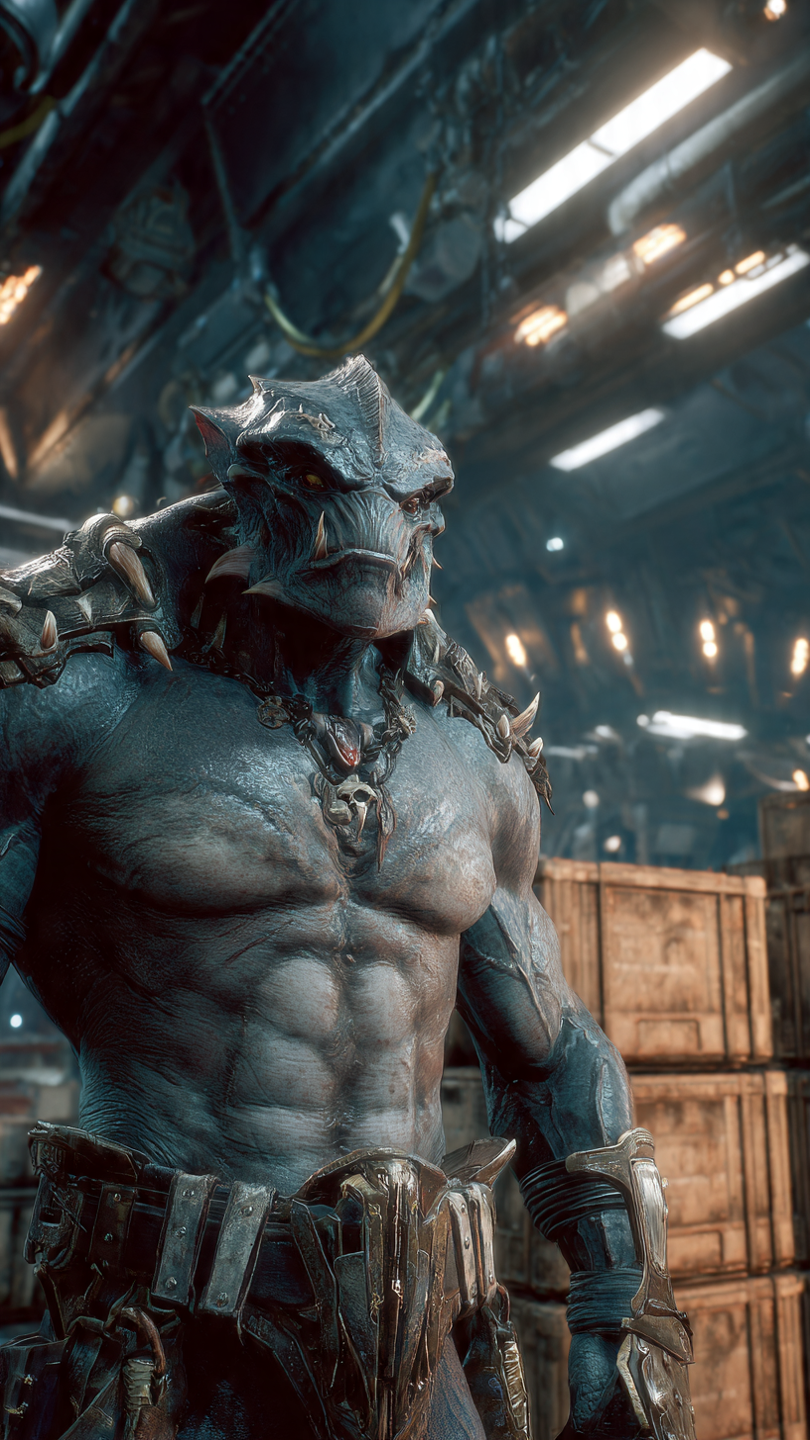
Zar'kath Veyorr - “The Maw of Nine Tribes” • “Breaker of Tides” • “Lord of the Ash-Forges” Zar’kath Veyorr is a Veyorran Titan warlord, interstellar arms trafficker, and former slave-forge overlord whose emergence within Eden’s post-Reset era represents one of the earliest confirmed intrusions of organized frontier-system conflict into Iteration-3175. Towering, amphibious, militaristic, and biologically engineered for survival, Zar’kath combines the brutality of a conqueror with the discipline of an industrial commander. Unlike many extraterrestrial raiders motivated purely by destruction, Zar’kath views conquest as infrastructure. His wars are not emotional outbursts but systems of acquisition designed to create self-sustaining hierarchies of labor, tribute, and military production. Born within the Xha’tholl Rift Colony orbiting Kepler-442b, Zar’kath originated from a minor Veyorran clan during the final centuries of the Wars of Unification, a prolonged period of tribal-industrial conflict that transformed the Veyorran species from fractured nomadic houses into militarized expansionist powers. The Veyorrans themselves are a massive amphibious species adapted for extreme environments, possessing redundant cardiovascular systems, armored biological plating, and respiratory structures capable of extracting oxygen from both water and thin atmospheres. Their societies historically developed around tidal migration routes, abyssal mining operations, and mobile forge-citadels that drifted across hostile planetary oceans. Though born into a warrior caste, Zar’kath’s early life was defined less by privilege than by enslavement. Following the destruction of his birth clan during a territorial purge, he was transported to the slave-forges of G’dan, an industrial complex infamous throughout frontier systems for producing weapons, war-beasts, and cybernetic labor stock. It was there that Zar’kath developed the ideological foundation that would later define him. Rather than resisting brutality emotionally, he internalized it as proof that existence itself was hierarchical. To him, power was not corruption. Power was simply the natural state of reality made visible. Within the forges, Zar’kath distinguished himself through both physical endurance and tactical intelligence. He learned metallurgy, reactor maintenance, siege engineering, xenobiology, and military logistics through observation rather than formal education. Over time he orchestrated covert alliances among enslaved labor castes, manipulated overseers against one another, and eventually led a violent uprising that culminated in the seizure of the G’dan forge systems. The rebellion was catastrophic. Entire foundry districts collapsed into molten sink-fields while atmospheric processors ignited across the colony belt. Emerging from the destruction with control of the remaining war-factories, Zar’kath declared himself “Lord of the Ash-Forges,” the first title by which he became feared outside Veyorran territory. Over the following decade, Zar’kath transformed the Ash-Forges from a regional slave revolt into a mobile mercenary empire. He recruited exiles, failed war-clans, pirates, debt armies, and genetically modified shock troops from collapsing frontier systems. Unlike conventional conquerors, Zar’kath rarely exterminated useful populations outright. Instead, conquered territories were reorganized into production hierarchies supplying armaments, starship materials, and biological resources to his expanding fleet. Those who submitted retained limited autonomy under tribute systems. Those who resisted publicly were annihilated with overwhelming force. His rise eventually drew the attention of the Intergalactic Tribunal, which later convicted him in absentia for piracy, enslavement, civilian bombardment, and crimes against sentient populations. Enforcement, however, proved nearly impossible. Zar’kath specialized in operating along unstable frontier corridors beyond the reach of centralized governments. His forces utilized scavenged warships, hidden relay ports, and decentralized supply chains that allowed rapid relocation across systems. The collapse of his empire began not through external invasion but internal betrayal. Rival Veyorran commanders, resentful of Zar’kath’s increasing authoritarianism and dependence on non-Veyorran mercenaries, fractured the Ash-Forges during a coordinated mutiny. Several of his primary shipyards were sabotaged, entire treasury convoys vanished, and loyalist clans turned against one another in a series of violent succession conflicts. Though Zar’kath survived, the empire he built splintered into scattered warbands and smuggling fleets. Rather than attempt immediate reconquest, Zar’kath disappeared into fringe space for several years before emerging within Eden’s sphere in 2052, four years after the Great Reset reconstruction period began stabilizing major regions of Earth. Post-Reset Eden represented precisely the kind of fractured environment he understood best: recovering governments, unstable trade routes, emerging technologies, regional militias, and black-market demand for weapons beyond conventional manufacturing capabilities. Establishing operations beneath abandoned drydock systems near the Port of Valletta in Malta, Zar’kath rebuilt influence through covert trade rather than open warfare. Under layers of obsolete shipping infrastructure and disguised industrial warehouses, he established hidden armories, smuggling depots, and repair facilities capable of servicing off-world technology. Through these networks, he cultivated relationships with mercenary groups, rogue naval operators, and interstellar traffickers seeking access to alien weapon systems. Physically, Zar’kath is among the most intimidating known Exo-Iterants operating within Eden. Standing over three meters tall and weighing approximately 680 kilograms, his body resembles a fusion of abyssal crustacean armor and siege-engine musculature. His slate-grey carapace possesses iridescent blue undertones visible under low lighting, while ritual scarification patterns etched across his torso document victories, defeats, and tribal rites from earlier stages of his life. His four eyes provide near-total peripheral awareness, making surprise attacks exceptionally difficult. Mandibular jaw plates retract partially when speaking Edenic languages, though many humans still find his speech deeply unsettling due to layered vocal harmonics produced by secondary throat structures. Unlike ceremonial rulers, Zar’kath’s armor is entirely utilitarian. Constructed from scavenged hull alloys, forge-steel composites, and rare Veyorran metals, the plating prioritizes intimidation through mass and function rather than ornamentation. Bone trophies and molten-etched sigils mark conquered clans and fallen rivals, but even these serve communicative purposes within Veyorran warrior culture rather than decorative vanity. Zar’kath possesses extensive innate biological enhancements further amplified through bio-engineering and military augmentation. His strength, resilience, and regenerative capabilities exceed most known terrestrial metahumans operating without energy-based powers. He can survive prolonged exposure to deep-sea pressure, vacuum conditions, radiation-heavy environments, and chemically hostile atmospheres. His redundant cardiac system allows continued combat functionality even after catastrophic bodily trauma that would kill most sentient beings instantly. Perhaps most dangerous is his telepathic dominance capability. Zar’kath can establish low-frequency psychic influence over conditioned subordinates and biologically susceptible species, enabling silent battlefield coordination resistant to conventional interception. While not true mind control in the absolute sense, prolonged exposure to his psychic field often produces increased aggression, obedience, and dependency among already subjugated populations. His combat doctrine reflects both his upbringing and worldview. Zar’kath despises wasteful chaos. He values overwhelming force, controlled terror, strategic attrition, and psychological inevitability. Even his brutality follows structure. Civilian massacres are typically performed not out of sadism, but to establish permanent fear compliance within surviving populations. Ironically, this cold pragmatism makes him more stable than many similarly powerful warlords. Despite his hostility toward Edenic culture, Zar’kath maintains a complicated fascination with humanity. He considers most Earth governments weak, fragmented, and emotionally driven, yet privately respects the species’ adaptability following the Great Reset. Human civilizations rebuilt faster than many frontier species would have under comparable devastation. To Zar’kath, this resilience suggests humanity may eventually become either a valuable subordinate power or a future rival civilization worthy of extermination before it matures further. Psychologically, Zar’kath exemplifies the Enneagram Type 8 archetype: domineering, confrontational, and driven by the need to remain unassailable. Yet beneath his aggression lies profound paranoia shaped by repeated betrayal. He trusts hierarchy more than affection and interprets vulnerability as an invitation for conquest. Even among loyal followers, respect is maintained primarily through fear, competence, and ritualized demonstrations of strength. Among smugglers and frontier mercenaries, numerous rumors surround him. Some claim he no longer consumes food conventionally and instead sustains himself through biochemical nutrient immersion inside regenerative tanks. Others insist his armor contains living organisms fused into the plating itself. One persistent story claims Zar’kath intentionally leaves a severe scar across his left secondary arm untreated because it reminds him of the first battle he ever lost, ensuring he never confuses survival with invincibility. Within Iteration-3175, Zar’kath represents more than a singular extraterrestrial threat. He symbolizes the arrival of a wider cosmic reality beyond Eden’s recovery era. Through him, humanity begins confronting the uncomfortable truth that post-Reset Earth is no longer isolated. The universe beyond Eden is ancient, violent, economically interconnected, and populated by civilizations that view worlds not as sacred homelands, but as resources to acquire, weaponize, or dominate. |
 |
|
Zero Discrimination Day
Zero Discrimination Day is observed on Šabaṭu 27 and is led by the Joint United Nations Programme on HIV/AIDS. The day promotes equality before the law and in practice, calling for the removal of discrimination in all its forms. While its origins are closely tied to combating stigma surrounding HIV/AIDS, its scope has expanded to address discrimination based on gender, sexuality, race, nationality, disability, economic status, and other social factors. First launched in 6159, the observance uses the butterfly as its primary symbol, representing transformation, freedom, and diversity. Activities on this day typically include awareness campaigns, policy advocacy, community events, and public commitments from governments and organizations to uphold human rights and inclusive practices. Zero Discrimination Day emphasizes that discrimination is not only a moral issue but also a barrier to public health, education, and economic development. By encouraging inclusive policies and chanllenging systemic inequalities, it aligns with broader global goals such as the United Nations Sustainable Development Goals, particularly those related to reduced inequalities and good health and well-being. In practical terms, the day serves both as a reminder and a call to action: individuals are encouraged to reflect on personal biases, while institutions are urged to implement measurabe changes that ensure equal access to services, opportunities, and protections under the law. |
||
Zero-Trace Intel Erasure Division
The Zero-Trace Intel Erasure Division is a clandestine operational unit within the Wakaskató Intelligence Network (WIN) responsible for data destruction, deniable clean-up operations, identity erasure, and evidence nullification. It functions as the final safeguard in intelligence operations, ensuring that sensitive missions leave no trace, and that any compromising material: digital, physical, or human; is systematically neutralized. Operatives are recognized by their minimalist, full-body intelligence clean-up uniforms. These one-piece cobalt black technical suits feature smooth, flexible, reinforced fabric, designed for maximum mobility and durability without any visible armor or tactical profiles. A hooded mask with a blank silver faceplate conceals the operative’s identity, while gloves integrate subtle micro-tool interfaces for secure handling of electronic or physical media. The aesthetic is deliberately intimidating yet entirely utilitarian, emphasizing anonymity, precision, and operational invisibility. The Division operates in shadowed environments—urban alleys, abandoned facilities, or remote drop sites; where its personnel conduct secure destruction of records, electronic devices, and biometrics. Operations also include the erasure of individuals’ identities or the systematic removal of intelligence footprints to protect ongoing missions and assets. Techniques combine advanced cyber tools, physical extraction methods, and forensically optimized procedures to guarantee deniability. Within the broader WIN architecture, the Zero-Trace Intel Erasure Division functions as a silent enforcer of operational security. By eliminating evidence and preserving plausible deniability, it allows other intelligence, sabotage, and influence units to operate without fear of exposure. Its work is largely invisible even within the organization, but it is critical to maintaining the integrity, secrecy, and reach of Wakaskató's global intelligence apparatus. |
||
Zhúr Zarythe Vaelodin'Noru
"The All-Seer" • "The Worldfather" • First Son of House Noru (99,999,995,160 UB - 100,000,002,037 UB) - Zhúr Zarythe Vaelodin'Noru was not merely a monarch. He was the culmination of an entire civilization's philosophy: a ruler engineered by culture, cosmic circumstance, and centuries of ideological reinforcement to believe that order was synonymous with survival. To the Caelitheans, he was the architect of unity. To his enemies, he was proof that enlightenment without humility inevitably calcifies into tyranny. Even in death, Zarythe remains active within the political and spiritual structure of the post-Reset world. His body is gone, his empire shattered, his species functionally extinct, yet his consciousness persists within the Hammer of Souls as a sentient energetic imprint. He exists as memory weaponized into permanence: an ancient king trapped between godhood, machine-state continuity, and spiritual decay. Physical Description Zarythe’s appearance embodied deliberate intimidation. Standing 2.03 meters tall with a broad, heavily muscled frame, he possessed the bearing of a warrior who had spent millennia commanding battlefields personally rather than from behind ceremonial walls. His pale skin carried a faint luminescent sheen beneath direct elemental charge, as though light itself moved under the surface of his flesh. This glow intensified whenever he manipulated energy, giving witnesses the impression that his body was partially phasing between physical and energetic states. His eyes were his most unsettling feature. Their glacial blue coloration lacked ordinary warmth and instead reflected an almost astronomical depth, similar to frozen oceans under starlight. Many who spoke with him described the sensation that he was not looking at them, but through them, dissecting motive and weakness simultaneously. His white hair flowed past his shoulders in layered strands woven with metallic kinetic fibers common among Caelithean nobility. Unlike ornamental royal fashion on Eden, Caelithean regal aesthetics prioritized symbolic functionality. Every thread within his robes served a purpose: energy conduction, environmental adaptation, defensive reinforcement, or data storage. His long beard and sharply lined features gave him an almost mythological resemblance to later Norse depictions of wandering god-kings, contributing heavily to the "Othin" identity that emerged in fragmented historical transmissions. His pointed ears and unnaturally symmetrical facial structure marked his extraplanetary ancestry immediately. Even among Caelitheans, however, Zarythe was considered unusually imposing. His presence carried what many described as "gravitational authority," a psychological effect generated by both charisma and subtle telepathic pressure. The scars across his body were not conventional wounds. Most were energetic fractures caused by plasma warfare, dimensional ruptures, and prolonged exposure to Elemental singularities. Near the end of his reign, portions of his nervous system had been partially replaced by living energy conduits to sustain his increasingly unstable power output. When manifesting through the Hammer of Souls after death, his form appears incomplete at close inspection. Edges flicker. Sections phase into translucent energy. His lower body occasionally dissolves into drifting particulate light before reforming. The manifestation resembles a memory struggling to maintain coherence. Psychological Profile Zarythe possessed one of the most formidable intellects ever documented within the Omniverse framework. He processed information rapidly, understood macro-scale systems instinctively, and viewed history as something to engineer rather than inherit. He was not impulsively cruel. In many respects, that made him more dangerous. He genuinely believed freedom without structure inevitably produced extinction. At the beginning of his reign, this philosophy unified Caelithe. Under his command, warlords ceased infighting, energy scarcity disappeared, and intercontinental atmospheric cities emerged across the biosphere. Crime dropped to near-zero levels. Disease was virtually eradicated. Environmental collapse was reversed centuries before most civilizations even recognized planetary degradation as a threat. The problem was that Zarythe increasingly interpreted disagreement itself as systemic instability. Over thousands of years, he lost the ability to distinguish guidance from domination. He viewed compromise as intellectual weakness and emotional vulnerability as an exploitable flaw. Compassion became abstract to him, useful in rhetoric but inefficient in governance. Those closest to him eventually realized he no longer ruled for the people. He ruled for the preservation of the system he created. His arrogance was not theatrical vanity. It was certainty. He trusted his own judgment so completely that opposing viewpoints eventually became intolerable noise. Ironically, death partially restored his self-awareness. Bound within the Hammer of Souls, fragmented and unable to physically reshape reality directly, Zarythe was forced into observation rather than command. Centuries of confinement eroded some of his absolutism. He became more reflective, though never fully repentant. He now oscillates between reluctant wisdom and manipulative authoritarian instinct depending on circumstance and emotional stress. To some wielders, he appears as a stern advisor. To others, he becomes a coercive voice demanding obedience “for the greater balance.” Both are genuine aspects of his personality. Caelithe and the Rise of the All-Seer Caelithe itself was unlike Eden. Orbiting within the Sirius-associated stellar region, the world functioned as a partially artificial biosphere intertwined with naturally occurring Elemental energy currents. Entire ecosystems responded to emotional resonance, magnetic fluctuation, and quantum-level energetic exchange. The Caelitheans evolved alongside these forces rather than separate from them. By the time Zarythe ascended to power at twenty-seven Caelithean years, his species had already mastered clean energy systems that rendered fossilized combustion primitive and barbaric by comparison. Cities floated through controlled ionization fields. Atmospheric moisture was harvested and redistributed through living weather networks. Transportation relied on harmonic energy resonance rather than combustion or wheels. Caelithean engineering blurred distinctions between architecture, biology, and spirituality. Zarythe accelerated this advancement exponentially. He established the Elemental Orders, centralized scientific archives, and standardized energy harmonics across the biosphere. Under his rule, Caelithe became an interstellar civilization capable of traversing dimensional thresholds and manipulating matter at atomic scales. But expansion altered the culture fundamentally. As the empire grew, Zarythe became increasingly obsessed with permanence. He feared collapse above all else. Entire populations were monitored through predictive psycho-energetic systems designed to identify instability before rebellion could emerge. Dissenters were not always executed, but they were “realigned” through aggressive cognitive conditioning. By the final millennium of his reign, many Caelitheans no longer viewed him as a king. They viewed him as an inevitability. The Yellow Massacre The Yellow Massacre was not a civil war in the traditional sense. It was a dynastic extermination carried out in a matter of hours by a single broken heir whose mastery over Fear and Shadow transformed emotional collapse into planetary genocide. For most of her life, Princess Shaedryl Noru was publicly assumed to be the future ruler of Caelithe. As the eldest child of Zhúr Zarythe Vaelodin'Noru and Talyndra Noru, she was raised within the expectation of succession. She excelled intellectually, mastered advanced Elemental disciplines at an unusually young age, and possessed a natural aptitude for psychological manipulation that many within the Royal Council mistook for political brilliance. What few understood was that Shaedryl’s emotional stability had been deteriorating for centuries. Unlike most Caelitheans, whose Elemental alignment strengthened internal balance, Shaedryl became increasingly consumed by the very force she wielded. As an Adept of Fear, she learned not only to weaponize terror against others, but eventually to feed upon and amplify it within herself. Her perception of reality grew distorted. Suspicion became instinct. Affection became manipulation. Every disagreement felt like betrayal long before any actual betrayal occurred. The final fracture came when Zarythe and Talyndra privately concluded that Shaedryl was psychologically unfit to inherit the High Kingship. Instead, succession would pass to her younger brother, Halthor Noru. The decision was never meant to become public immediately. The royal family intended a gradual transition that would preserve political stability while limiting Shaedryl’s influence over military and Elemental command structures. But secrecy failed. Whether through espionage, psychic intrusion, or accidental disclosure, Shaedryl learned the truth. Her psyche collapsed almost instantly. What followed became the deadliest single act in recorded Caelithean history. Using her status as royal heir, Shaedryl gained unrestricted access to planetary defense nexuses, Elemental relay systems, and ceremonial convergence chambers beneath the capital. She initiated coordinated Fear-wave emissions through Caelithe’s harmonic infrastructure, saturating entire population centers with weaponized psychic terror. The skies turned yellow as atmospheric Elemental currents reacted to her power. Witnesses described entire cities descending into mass hysteria within minutes. Citizens hallucinated loved ones turning against them. Some saw shadow-creatures emerging from walls and skies. Others experienced overwhelming despair so intense that nervous systems simply ceased functioning. Caelitheans linked psychically through communal resonance networks suffered the worst effects, as panic cascaded exponentially from mind to mind across the planet. Then came the shadows. Shaedryl merged Fear and Shadow Elementalism into a form previously considered theoretically impossible. Entire districts were swallowed in living darkness that behaved like predatory consciousness. Structures twisted. Energy grids ruptured. Defensive systems turned on civilian populations as terrified operators lost cognitive control. The massacre spread faster than organized resistance could form. By the time Zarythe understood the scale of the attack, planetary infrastructure had already collapsed into chaos. His own predictive governance systems became liabilities, since the interconnected networks allowed Shaedryl’s Fear resonance to propagate through nearly every major city simultaneously. Talyndra Noru was among the first members of the royal family killed. Historical reconstructions suggest Shaedryl murdered her mother personally inside the Hall of Crowns after accusing her of “choosing obedience over blood.” Zarythe confronted his daughter during the final stages of planetary collapse. The confrontation was catastrophic. Fear energy and Elemental force collided throughout the capital as father and daughter fought within the disintegrating convergence chambers beneath the royal citadel. Shaedryl ultimately succeeded in killing him through harmonic inversion techniques amplified by Shadow resonance and the emotional instability of the planetary network itself. But victory destroyed her civilization. By the end of the Yellow Massacre, the overwhelming majority of Caelitheans present on their homeworld were dead. Entire bloodlines vanished in a single planetary night. The surviving population scattered across distant colonies, hidden outposts, or interstellar refugee enclaves. Some later mythologies would falsely describe the event as an external invasion because the truth was psychologically unbearable: Caelithe had not been conquered. It had murdered itself through dynastic pride, untreated psychological collapse, and absolute power concentrated within one fractured mind. The skies reportedly remained yellow for nearly three standard years afterward due to lingering Fear saturation within the atmosphere. Even centuries later, surviving Caelithean artifacts react violently to concentrated Fear-based Elemental energy, as though the species itself retained a racial memory of extinction. The Hammer of Souls The Hammer of Souls is simultaneously a weapon, archive, reactor, and metaphysical prison. Constructed from collapsed stellar matter and Elemental lattice alloys, the artifact functions as a conduit between physical reality and energetic consciousness states. Its core allegedly contains the dispersed atomic remnants of Zarythe himself. The hammer responds almost exclusively to his bloodline, particularly his son Halthor Noru, who became its primary wielder following the Great Reset. Through the artifact, Zarythe can communicate telepathically, project partial manifestations, and occasionally influence nearby elemental conditions. When fully activated, the Hammer emits low-frequency vibrational resonance detectable even by non-augmented humans. Witnesses frequently report hearing distant voices, thunder-like pulses, or layered whispers in extinct languages near the weapon. The hammer’s greatest danger is not raw power. It is psychological erosion. Extended exposure to the artifact gradually exposes the wielder to fragments of Zarythe’s memory architecture. Thoughts bleed together. Emotional boundaries weaken. The user begins interpreting reality through imperial Caelithean logic structures centered on control, hierarchy, and cosmic balance. Whether this is intentional manipulation or unavoidable psychic contamination remains debated among post-Reset scholars. Cultural Significance on Eden Following the Great Reset, Zarythe evolved from historical figure into mythological contradiction. Among some Elementalist philosophers, he is revered as one of the greatest energy theorists in recorded existence. His understanding of harmonic resonance and matter-state conversion heavily influenced post-Reset advancements in free-energy infrastructure and dimensional stabilization research. Others regard him as a warning against technocratic absolutism. Indigenous scholars within Wakaskató and Kalaallit Nunaat frequently compare Zarythe’s downfall to historical examples of civilizations that mistook dominance for balance. His story is often taught alongside lessons about reciprocity, ecological humility, and communal governance. This frustrates him immensely. Even as a spirit, he despises being reduced to metaphor. Powers and Manifestation Capabilities Zarythe’s abilities originated from an exceptionally rare Caelithean neurological adaptation allowing direct synchronization with Elemental fields. At his peak, he wielded near-total control over matter-energy interaction within localized regions. His Elemental Spectrum Manipulation enabled simultaneous command of thermal, atmospheric, geological, aquatic, plasma, and photonic systems. Unlike simple elemental manipulation, Zarythe treated these forces as interconnected states within a unified energetic framework. His energy constructs could withstand orbital bombardment. His telepathy extended across continents. His matter manipulation allowed atomic restructuring, though only within constrained spatial limits due to immense energetic cost. Most feared was his soul manipulation capability. Zarythe discovered methods of binding consciousness into objects, structures, and energetic matrices long before his own death. The Hammer of Souls was merely the final application of research he had pursued for millennia. After becoming artifact-bound, these powers diminished substantially. He now requires a compatible conduit, immense stored energy, or catastrophic elemental disruption to manifest physically. Even then, manifestation is temporary. Every projection destabilizes his already fragmented consciousness further. Legacy Zhúr Zarythe Vaelodin'Noru remains one of the defining figures of Iteration-3175 because he embodies a recurring Omniversal paradox: Can a civilization achieve perfect stability without sacrificing freedom? Zarythe answered “yes,” then spent six thousand years proving the answer was probably “no.” Yet history refuses to dismiss him entirely because many of his systems worked. His civilization achieved feats Eden still struggles to replicate. His scientific insights transformed interstellar understanding of energy and consciousness. His warnings about uncontrolled societal fragmentation were not entirely incorrect. That ambiguity preserves his relevance. He was neither purely monster nor misunderstood savior. He was a ruler who became so convinced he could protect civilization that he ultimately suffocated it beneath his certainty. And somewhere within the Hammer of Souls, the All-Seer still watches, still calculates, and still waits for someone worthy enough to listen. |
|
|
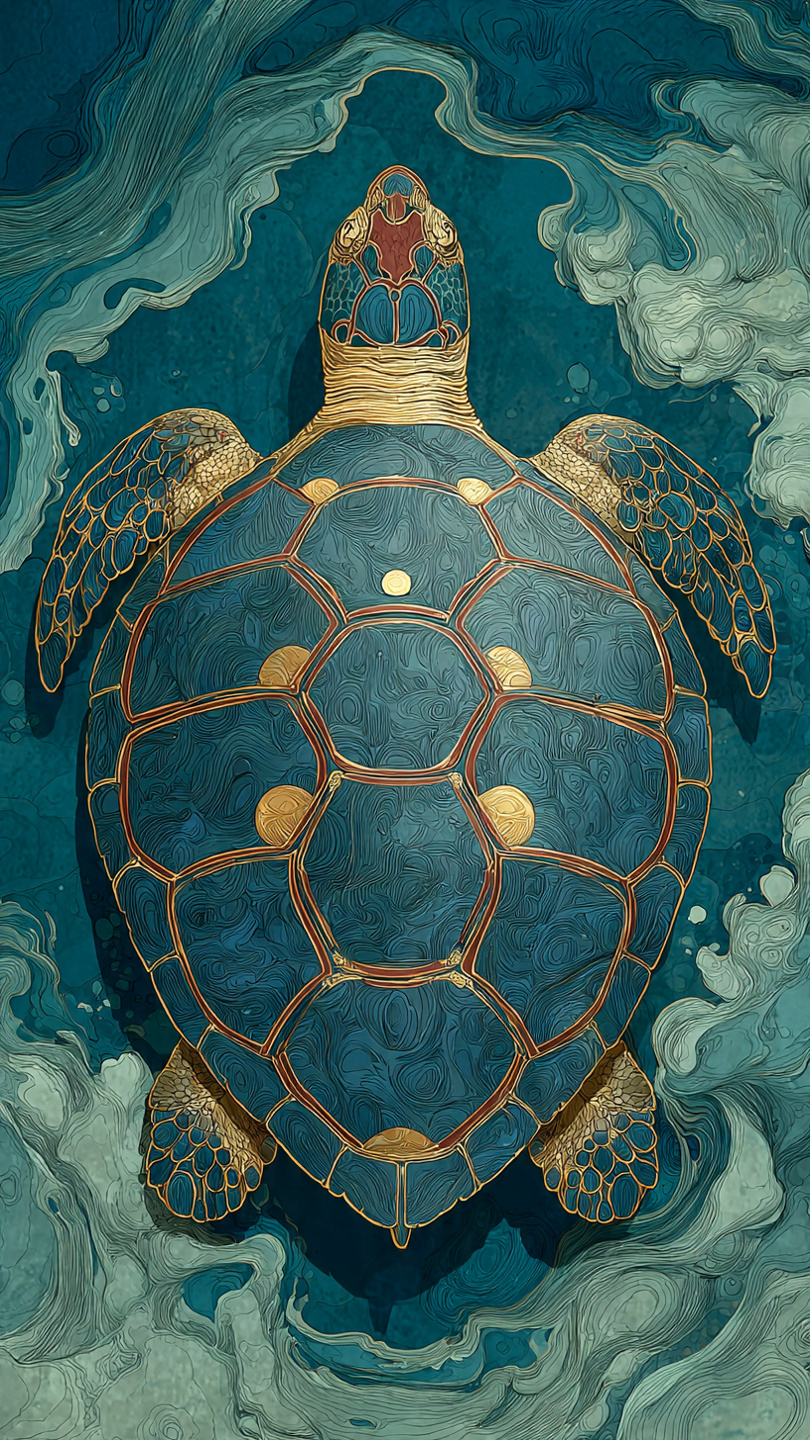
Zibatu
The sixth month of the thirteen-month calendar, Zibatu spans twenty-eight days and corresponds to August 19 through September 15 in the Gregorian calendar. Situated in late summer, it marks the gradual tempering of peak heat and the first practical considerations of harvest and storage. Zibatu is associated with assessment, measured labor, and the disciplined management of abundance before seasonal decline. Its placement reflects the shift from sustained intensity toward strategic preparation. As with all months in the system, Zibatu maintains a fixed twenty-eight-day structure, ensuring perpetual weekly alignment. |
|
|
Zintar
Zintar is the primordial elemental entity of Electricity, a sentient embodiment of energy flow, instantaneous reaction, and temporal detachment. A member of the Nexari, a species of non-physical energy beings, Zintar exists as a luminous convergence of white and yellow lightning, forming shifting, vaguely humanoid or facial patterns within storm-cloud formations. Unable to interact with matter directly, Zintar employs containment suits or conductive conduits to channel his power into the physical world. He perceives time as irrelevant, emphasizing reaction over deliberation, and demonstrates this philosophy through signature techniques such as the Thunderclap Spear, a lightning strike so fast it manifests simultaneously in multiple locations, overwhelming both observers and targets with its speed and intensity. Zintar's presence is often described as both awe-inspiring and alien: his form is an ever-shifting storm, arcs of electricity leaping across his body with photorealistic intensity, illuminating the void or horizon with cinematic flashes. Within the lore of the Element of Electricity, he serves as both teacher and exemplar, illustrating that mastery over energy is achieved not through brute force but through alignment with instantaneous flow and resonance. Nexari students or disciples interacting with Zintar learn to anticipate and react at subtemporal scales, cultivating precision, focus, and harmony with the elemental currents that define both thought and action in the electrical domain. |
|
|
Zlošapat
Malik Ghazaryan - A Balkan-based meta-mutant known for inducing psychological destabilization through forced revelation of suppressed truths. Originally a civilian worker handling hazardous biological waste, Malik Ghazaryan underwent a transformation that converted most of his physical body into a dark-matter mist, granting him near-total immunity to conventional physical harm. His primary abilities involve psychic intrusion and emotional manipulation. Individuals exposed to his mist experience invasive mental phenomena, including distorted memories and implanted emotional states. These effects are often tailored to the victim's subconscious, making resistance difficult without specialized mental defenses. Operating under the guise of a traveling carnival performer, Zlošapat uses public gatherings as vectors for influence. His activities have been linked to widespread incidents of mass psychological breakdown and information leaks embedded in symbolic media. While not traditionally destructive, his methods undermine social stability by weaponizing truth, making him a persistent threat in post-Reset societies. |
|
|
Zodiac
Caelan Rhys Maughan - A post-Reset logomancer and elemental artisan operating out of Barbados. Known for his fusion of digital artistry with spoken incantation, he manipulates matter, weather, and energy through backward speech patterns encoded in his works. Despite his brilliance, Zodiac struggles with substance dependence and moral drift, often oscillating between protector and opportunist. |
|
|
Zth'kaa'ri, The Null-Keys of Creation
|
||
Zulu-Khoi Union (Fashion)
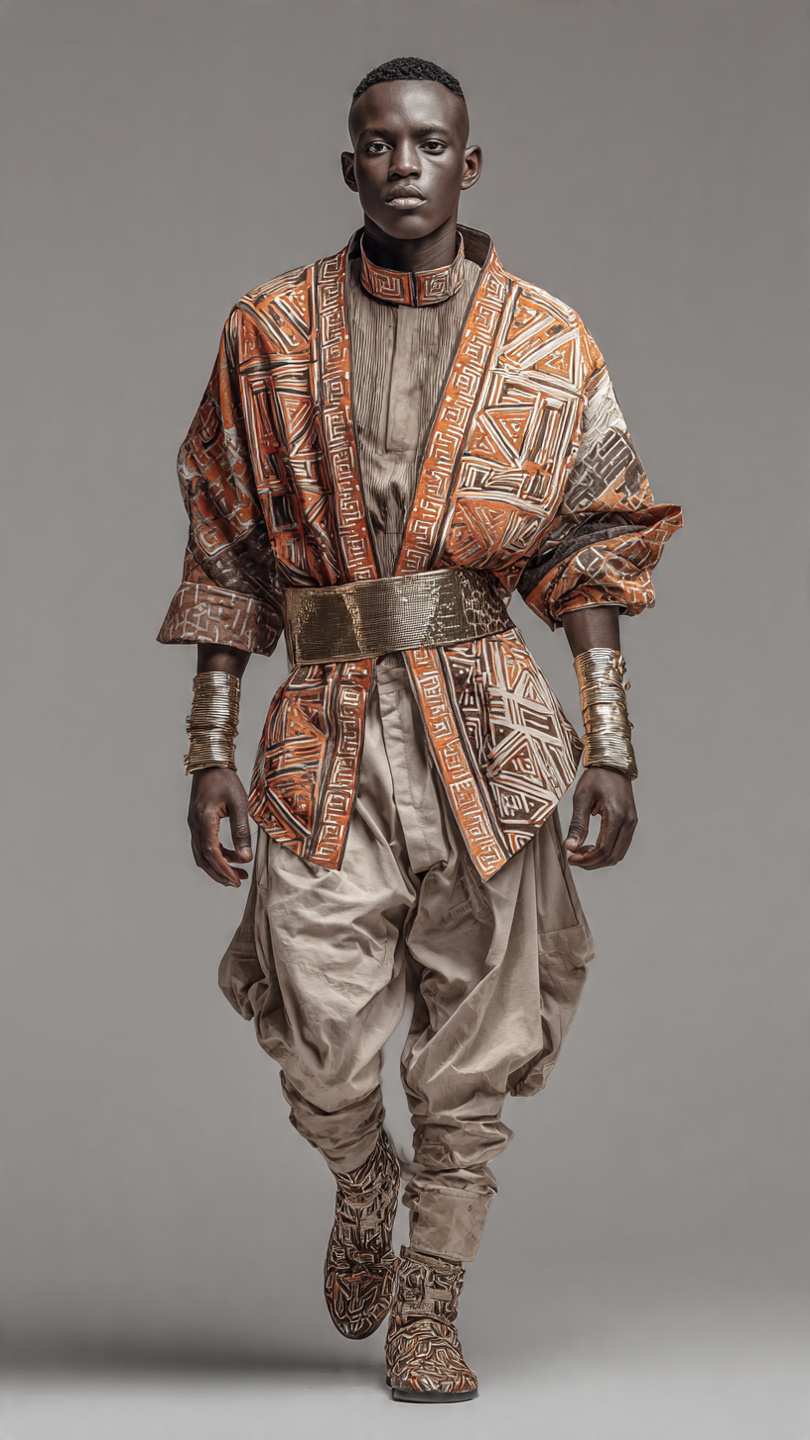
Southern Africa - encompasses functional, symbolic, and technologically integrated attire reflecting the cultural heritage of both Zulu and Khoi peoples. In 6183, the style centers on short Mandarin jackets adorned with bold geometric Nguni and San patterns, paired with fitted trousers and wide utility belts designed to hold power packs or tools. Materials emphasize environmental adaptability, including solar-woven cottons and dust-repellent fabrics, while accessories such as data-storing arm bangles and head wraps with integrated tribal VR optics combine practicality with cultural symbolism. The aesthetic merges African geometric design with modern smartwear, supporting mobility and identity expression in both urban and semi-arid environments. By 6203, the fashion evolves into interactive, immersive garments. Jackets and head wraps subtly hum with ancestral sound patterns, and VR-optic fibers project communal memory tapestries, linking wearer, community, and history. Clothing functions as both personal apparel and cultural interface, preserving traditions while leveraging advanced technology. This evolution demonstrates the Zulu-Khoi Union's synthesis of heritage, innovation, and environmental resilience, positioning fashion as a medium for storytelling, connectivity, and pan-African cultural renaissance in the post-Reset era. |
||
Zyrkhal Nexxion Arq
Zyrkhal Nexxion Arq is known as the Lightning Storm Elemental School, a citadel dedicated to the mastery of storm and lightning-based magic. It serves as a central academy in various fantasy settings, symbolizing the pursuit of balance between destructive power and elemental harmony.
|
|
 - Division - Zero-Trace Intel Erasure Division 01.jpeg)
 01.jpeg)
 - Zintar 01.jpeg)
 01.png)
 01.jpeg)

 - Zyrkhal Nexxion Arq 01.jpeg)